Ingredient guide
Can You Mix Skincare Ingredients? A Practical Guide
Learn how to combine hydrating ingredients, vitamin C, retinoids, exfoliating acids, and sunscreen without overcrowding your routine.
Online ingredient charts can make skincare feel like a chemistry exam. In practice, compatibility depends on the complete formulas, their strength, how often you use them, and what your skin comfortably tolerates—not only the ingredient names on the front of the bottle.
The starting point
Give each formula a clear job and time of day. A routine can include more than one targeted ingredient without layering every active product in the same application.
01. First, define what “mixing” means
Using two ingredients within the same overall routine is different from blending two products together in your palm. Unless the directions specifically tell you to combine formulas, apply each product as directed. The finished formula—not a single ingredient in isolation—determines how it should be used.
More layers do not automatically create better results. The American Academy of Dermatology (AAD) notes that using too many targeted products can irritate skin. A useful order is cleanse, apply treatment, then follow with moisturizer and daytime sunscreen.
Before adding another active step, ask whether it has a distinct purpose. If two products promise the same benefit, adding both may create more complexity without giving your routine a clearer job.
Sources: AAD: Should I apply my skin care products in a certain order? · AAD: How to maximize results from anti-aging skin care products
02. Build support around targeted ingredients
Hydration and moisture support can make a targeted routine feel more comfortable. Hyaluronic acid and glycerin are humectants that help attract water, while ceramides help skin retain moisture. These ingredients can appear in serums or moisturizers, and their role is different from that of an exfoliating or renewal-focused active.
A hydrating step does not cancel out irritation from an overly aggressive routine. If skin becomes persistently red, itchy, swollen, or painful, stop the product that appears to be causing the reaction rather than trying to cover the symptoms with more layers.
Moisturizer still has a place even when a serum contains hydrating ingredients. Apply it after your treatment step to help reduce water loss and support a routine you can use consistently.
Sources: AAD: How to pick the right moisturizer for your skin · AAD: How to test skin care products
03. Keep daytime pairings focused
Vitamin C is commonly used in the morning before sunscreen. Niacinamide may appear in products designed for visible oiliness and blemishes, while azelaic acid is used in care for acne and dark spots. Whether they belong together for you depends on the complete formulas and their directions.
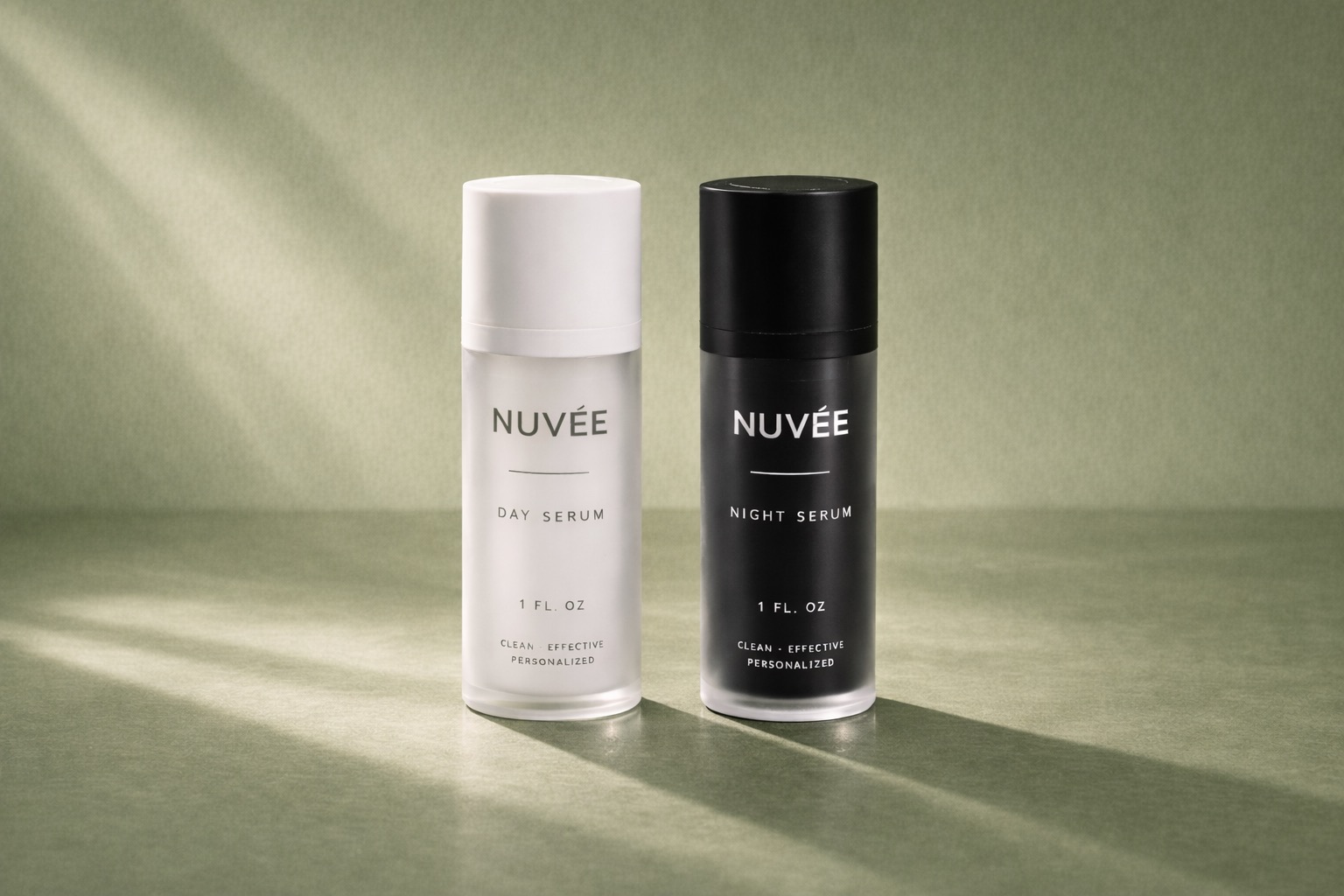
Instead of stacking separate serums for every benefit, a Day Serum can give selected ingredients one defined place after cleansing. Follow with moisturizer if needed, then finish with a water-resistant, broad-spectrum sunscreen with SPF 30 or higher.
Sunscreen is not interchangeable with an antioxidant or brightening serum. It remains the final skincare step in the morning, and it should be reapplied as directed when you are outdoors.
Sources: AAD: Dermatologist-recommended skin care for your 20s · AAD: Do facial masks work, and should I add one to my skin care routine? · AAD: How to fade dark spots in darker skin tones · AAD: How to apply sunscreen
04. Give stronger nighttime actives some space
Retinol and other retinoids are generally used at night. Alpha hydroxy acids (AHAs), such as glycolic acid and lactic acid, and beta hydroxy acids (BHAs), such as salicylic acid, exfoliate in different ways. Each can be useful in an appropriate formula, but usefulness does not mean every active belongs in the same evening routine.
The AAD warns that exfoliating while using retinol, prescription retinoids, or benzoyl peroxide may worsen dryness or irritation. When you are new to these ingredients, avoid crowding them into the same night. Follow the product directions, and use separate nights or another schedule only when the label or your dermatologist supports that approach.
If you are pregnant or planning a pregnancy, consult your doctor before using a retinoid. Anyone using a prescription treatment should ask the prescribing clinician before changing its timing or combining it with a new active product.
Sources: AAD: Retinoid or retinol? · AAD: How to safely exfoliate at home
05. Use time of day to simplify the routine
A day and night system creates separation without asking you to solve every ingredient pairing yourself. The Day Serum can sit beneath moisturizer and sunscreen, while the Night Serum can hold a different set of priorities beneath moisturizer before bed.
Use the pair in their assigned routines rather than layering both serums at the same time. Keeping those roles distinct also makes it easier to avoid adding duplicate active steps around them.
Personalization should still leave the routine understandable. You should know which bottle belongs where, what the surrounding steps are, and what to do if your skin feels uncomfortable.
Sources: AAD: Should I apply my skin care products in a certain order?
06. Introduce your new routine thoughtfully
Patch-test the Day Serum and Night Serum separately before applying them more widely. The AAD recommends testing a new skincare product on a small area twice daily for seven to ten days to watch for redness, itching, swelling, or another reaction.
If neither formula causes a reaction, begin using the pair as directed. Keep your cleanser, moisturizer, and sunscreen consistent, and avoid introducing other new active products at the same time. This treats the Day + Night pair as one coordinated routine change while keeping the rest of the routine easy to understand.
If irritation develops, pause the pair and reintroduce each serum separately to help identify the cause. Wash off a product that causes a reaction, and seek a dermatologist’s help when a reaction is severe, persistent, or difficult to identify.
Sources: AAD: How to test skin care products · AAD: How to maximize results from anti-aging skin care products
A clear day + night framework
- Morning
- Gentle cleanse → Day Serum → moisturizer → sunscreen.
- Evening
- Gentle cleanse → Night Serum → moisturizer.
- Adding the pair
- Test each formula separately, then begin the system as directed while keeping the rest of your routine steady.
General skincare education for adults. For ongoing skin symptoms or a condition requiring treatment, ask a dermatologist for a routine suited to you.
One coordinated system
Let your day and night formulas do different jobs.
NUVÉE separates personalized day and night care so targeted ingredients can have a clear place in your routine without asking you to build the combinations yourself.
Explore Personalized Day + Night