Routine science
Day Serum vs. Night Serum: What’s the Difference?
Learn why daytime and nighttime serums can serve different roles, how to layer each one, and when a two-serum routine makes sense.
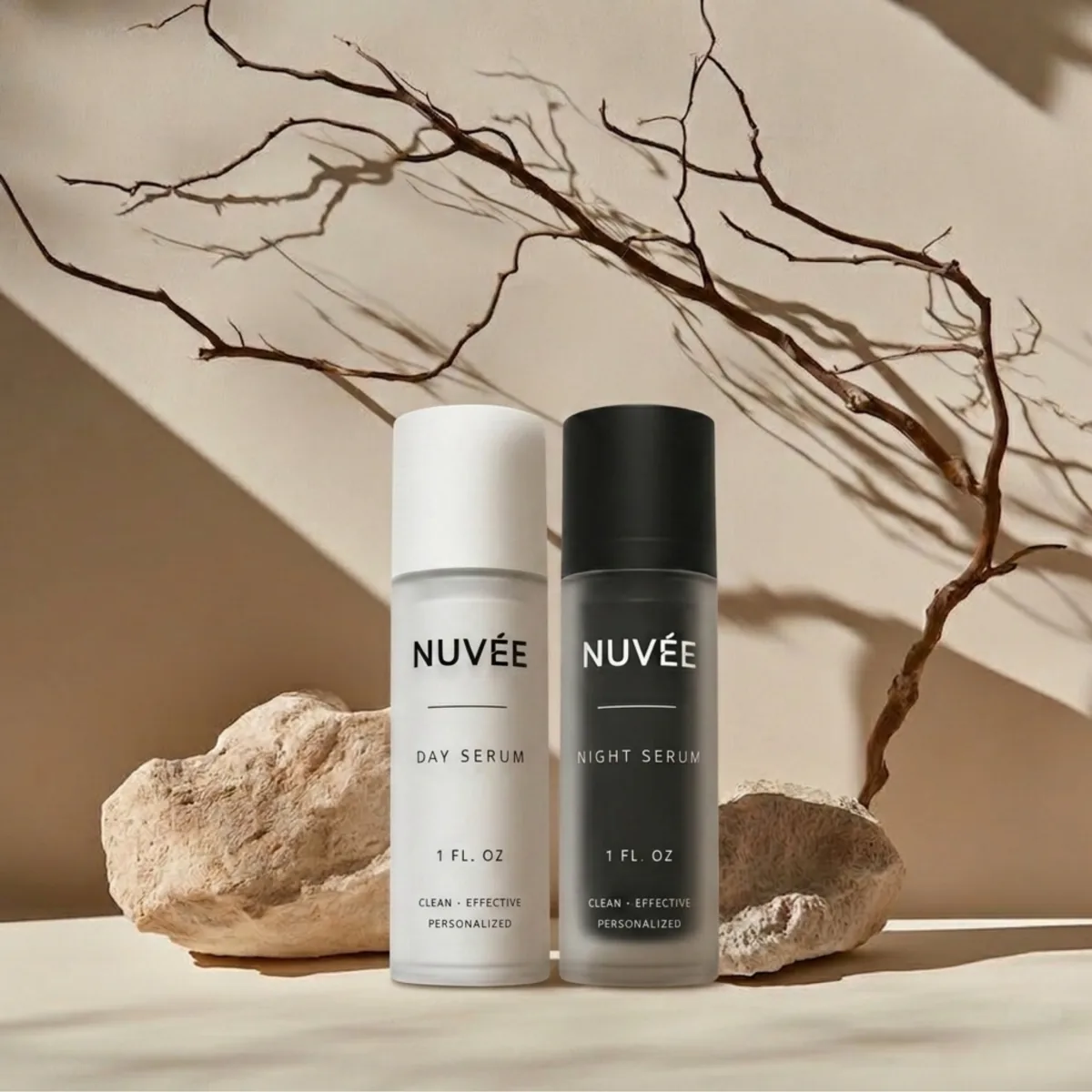
Your skin is still your skin from morning to night. What changes is the setting around it: the products you layer, the conditions you move through, and the job your routine needs to do. That is where separate day and night serums can be useful.
The starting point
A Day Serum should fit comfortably beneath moisturizer and sunscreen. A Night Serum can make room for renewal-focused care without competing with the demands of the daytime routine.
01. One routine, two different jobs
A morning routine has to prepare skin for the day ahead. It needs to layer well, feel comfortable, and leave room for sunscreen. An evening routine does not have to sit beneath sunscreen or makeup, so it can give a different set of ingredients its own place.
This does not mean everyone needs two serums. It means timing can be part of thoughtful formulation. When day and night products have distinct purposes, the routine becomes easier to understand: support and protect by day, then focus on targeted overnight care before bed.
Sources: AAD: How to apply sunscreen
02. What belongs in the daytime step
A Day Serum should be comfortable beneath moisturizer, sunscreen, and makeup. Depending on your skin goals, it may prioritize lightweight hydration, antioxidant support, and support for the appearance of uneven tone.
The serum is not the sun-protection step. The American Academy of Dermatology recommends a water-resistant, broad-spectrum sunscreen with SPF 30 or higher and advises reapplying every two hours while outdoors, as well as after swimming or sweating.
The practical order is simple: gentle cleanse, Day Serum, moisturizer if needed, then sunscreen. Follow the directions on each product and give every layer a moment to settle if that improves how the products wear together.
Sources: AAD: How to apply sunscreen
03. What belongs in the nighttime step
A Night Serum can focus on hydration, barrier support, exfoliation, or the visible signs associated with renewal, depending on the formula and your needs. Placing those priorities at night keeps the morning routine lighter and avoids asking one bottle to do every job at once.
Some ingredients have a clear reason to live in an evening routine. For example, the AAD advises using retinoids at night and wearing sun protection during the day. Retinoids can also irritate some skin and should not be used during pregnancy, so they are not automatically right for every person or every night formula.
The evening order is gentle cleanse, Night Serum, then moisturizer. If your formula includes an ingredient with specific timing or frequency directions, follow those instructions rather than assuming that more frequent use will produce better results.
Sources: AAD: Retinoid or retinol?
04. Why separate the formulas?
Separating day and night care creates room to make deliberate choices. The day formula can be designed for comfortable layering and daytime support, while the night formula can carry different priorities. It can also reduce the temptation to stack several active serums in the same routine.
That distinction matters because more products are not always more effective. The AAD recommends focusing on one primary concern when selecting targeted skincare and notes that introducing several products in a short period can irritate skin.
NUVÉE builds Day + Night as two parts of one personalized system. Ingredients and concentrations can differ between the formulas based on visible skin signals and individual goals; they are not simply the same serum in different bottles.
05. Start with purpose—and patience
Introduce new skincare thoughtfully. The AAD recommends testing a product on a small area twice daily for seven to ten days before wider use. If a reaction develops, wash the product off and stop using it; seek a dermatologist’s help for a severe or persistent reaction.
Consistency matters more than building the longest possible routine. Use each serum as directed, keep moisturizer and daytime sunscreen in place, and pay attention to comfort. If ongoing symptoms or a skin condition need treatment, a dermatologist can help build an appropriate plan.
Sources: AAD: How to test skin care products · AAD: How to select anti-aging skin care products
Your routine, at a glance
- Morning
- Gentle cleanse → Day Serum → moisturizer → sunscreen.
- Evening
- Gentle cleanse → Night Serum → moisturizer.
- Starting a new serum?
- Test it first, then follow its directions for frequency and use.
General skincare education for adults. For ongoing skin symptoms or a condition requiring treatment, ask a dermatologist for a routine suited to you.
Your targeted step
Day care and night care, personalized.
Explore a personalized serum pair designed around your visible skin goals and the different roles of your morning and evening routines.
Explore Day + Night Serums